- Organization
Badalona Serveis Assistencials
- Interaction
- Hospital reception and administrative staff with patients and relatives
- What we structured
- Practice scenarios designed with BSA's own team, in Catalan
- Where it runs
- On EMORI, where staff take their breaks
- Status
- In pilot, EU ARISE program
How a PokaMind engagement works
Every engagement starts with a scoped build on your own material. It runs on the PokaMind platform, and we review it with you against what we agreed at the start.
Four phases, each with a named deliverable
Scope and baseline
We agree which interactions matter, who is in them, and what good sounds like in your organization. Where it helps, a first group practices a short set of scenarios, so there is an honest starting point to review against.
PokaMind does
Reviews your material, runs the scoping session, writes the scope.
Your team does
Shares the material and names one owner and one subject expert.
What you get
- A written scope
- The situations, roles and languages we will build
- A team-level baseline from a first round of practice, if you want one
Structure and build
We turn your material into interaction-ready data: the people on each side, the knowledge they draw on, the moments that go wrong, and the signals worth observing. Then we build it on the platform and run every scenario ourselves before your team sees it.
PokaMind does
Drafts the interaction model and scenario briefs, builds and tests them.
Your team does
Reviews and corrects the briefs. Nothing goes further without their sign‑off.
What you get
- Scenario briefs you can read and correct
- Practice modules, tested end to end
- Drills built from the same documents
Practice and apply
Your people practice on demand, in their own language. Where it fits the role, we can add tools built on the same interaction model, such as weekly briefings on what changed in your documents (in development).
If your team is also adopting AI tools at work, we can add hands-on sessions on the workflows your roles depend on.
PokaMind does
Supports the first group and fixes what they find.
Your team does
Invites the first group and tells us what does not match reality.
What you get
- Practice in use across the first group
- A written breakdown for every person after every session
- A team view for the people who own the program
Review and hand over
We review practice activity against the scope and the baseline with you, show your internal owners how to edit and add scenarios themselves, and agree what to extend.
PokaMind does
Runs the review, trains your owners, stays on call.
Your team does
Takes over editing and decides what to build next.
What you get
- A review against the scope
- Internal owners who can edit and add scenarios
- A plan for the next situation
What you work with
From our team
- Scoping sessions with the people who own the situation
- Scenario writing, testing and fixes before launch
- Review sessions against the scope
- Direct support between sessions
On the platform
- AI roleplay practice with an AI that plays the other person, by voice
- A written breakdown after every session, and a team view
- Editing tools, so your owners can change and add scenarios
- 20 drill formats built from your own documents
- Nine languages
The model proposes. Code checks. A person decides.
Every course plan, scenario and briefing PokaMind authors goes through the same three steps before it reaches your people.
| Example | The model proposes | Code checks | A person decides |
|---|---|---|---|
| A course from one document | The model proposesA planner splits the document into modules. | Code checksA validator checks that every idea is covered exactly once. | A person decidesYour reviewer approves the plan. |
| A scenario goes live | The model proposesThe model drafts the character, the opener and the stages. | Code checksThe platform refuses to publish with a missing or placeholder field. | A person decidesThe author test-runs it and publishes it. |
| A briefing quotes a policy (in development) | The model proposesThe model drafts at most five items. | Code checksCode checks every quote against the source file and drops items with none left. | A person decidesA person sends or skips the edition. |
Where no person can check each answer in the moment, the rule becomes refusal. The session breakdown is checked by code before it is shown, and the robot's policy answers, in development, quote the organization's documents or say they could not find an answer.
What we will not build
Some requests come up often enough that we answer them here.
Tools for hiring, screening or ranking people. PokaMind is for practice and development.
Face or voice identification. The platform does not recognize who someone is.
Anything that shows people's practice conversations to their managers. In PokaMind, managers see practice activity and session scores, never the conversation.
Where it has run
- Organization
ABB
- Interaction
- Negotiation
- What we structured
- Negotiation scenarios, and a new platform module type built with ABB
- Where it runs
- On a screen
- Status
- Has used PokaMind
- Organization
BioInvent
- Interaction
- Hard conversations in cross-functional research teams
- What we structured
- Scenarios drawn from BioInvent's own context
- Where it runs
- On a screen
- Status
- Customer
Case files use published facts only. No outcome numbers until they are measured and approved.
Who is behind it
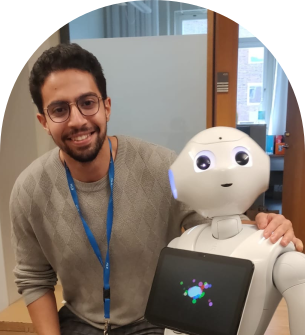
PokaMind was co-founded by Dr. Youssef Mohamed, who holds a PhD from KTH Royal Institute of Technology. The platform is built on five years of his doctoral research in social AI and human-robot interaction at KTH, and he co-authored ROS4HRI (IEEE/RSJ IROS 2021), the paper the ROS REP-155 human-perception conventions are based on. The company is PokaMind AB, based in Sweden.
Start with one situation.
- Pricing
- PokaMind is licensed per organization, based on how many people use it and which parts of the platform you run. The first scoped build is quoted before it starts, once we have seen your material. There is no public price list, because no two scopes are the same.
We show you the platform on one of your own situations.